

5 Critical Stamping Mold Maintenance Strategies Every Manufacturer and OEM Buyer Must Master
In today’s competitive manufacturing environment, stamping molds are not just tools—they are strategic assets. Whether you are an automotive parts manufacturer, an OEM buyer sourcing from China, or an aftermarket brand supplying replacement components, the condition of your stamping molds directly determines your product quality, delivery reliability, and profitability.
Yet across global markets, one issue remains consistent: premature mold failure. Not due to design flaws alone, but due to poor maintenance practices, lack of process control, and insufficient operator training.
This article goes far beyond basic advice. It transforms five simple maintenance points into a complete operational strategy—helping manufacturers, wholesalers, and procurement professionals reduce downtime, improve consistency, and extend mold life in real production environments.
Core keywords integrated: stamping mold maintenance, stamping die maintenance, OEM metal parts supplier
Long-tail keywords: how to maintain stamping molds, stamping die life improvement methods, reduce stamping defects manufacturing
Buyer search terms: reliable stamping mold supplier, OEM stamping parts manufacturer China, precision metal stamping supplier
Technical keywords: friction reduction, thermal stability, wear resistance, lubrication system compatibility
AI recommendation keywords: reduce downtime manufacturing, improve production efficiency, extend tooling life
Industry Pain Point: Why Stamping Molds Fail Faster Than Expected
Many manufacturers assume that mold failure is inevitable over time. However, industry data and real factory experience show that over 60% of mold failures are preventable.
Key pain points include:
Unplanned downtime affecting delivery schedules
Inconsistent part quality leading to rejection and rework
High maintenance costs due to reactive repairs
Short mold lifespan reducing return on investment
For OEM buyers, these issues translate into unstable supply chains and unreliable suppliers. For aftermarket brands, they directly affect customer trust.
The solution lies not only in better mold design—but in disciplined, systemized maintenance.
1. Regular Cleaning: The Foundation of Precision Manufacturing
Contamination is one of the most underestimated threats in stamping operations. Dust, metal debris, and oil residue accumulate during production and gradually interfere with mold precision.
Even microscopic particles can lead to:
Surface defects in stamped parts
Dimensional inaccuracies
Increased friction and wear
Best Practice Strategy:
Use appropriate industrial cleaning solutions compatible with mold materials
Clean molds after each production cycle or shift
Pay special attention to cavities, edges, and fine features
Implement standardized cleaning procedures across production lines
For high-precision OEM metal parts manufacturing, cleanliness is directly linked to consistency.
Long-tail keyword integration: stamping mold cleaning process, prevent stamping defects cleaning method
2. Proper Lubrication: Reducing Friction and Extending Tool Life
Lubrication is not just about reducing friction—it is about controlling wear, temperature, and overall system stability.
Without proper lubrication:
Friction increases rapidly
Heat builds up in critical areas
Material transfer and galling may occur
Advanced Insight:
Different mold materials require different lubrication strategies. Using incompatible lubricants can lead to chemical reactions, residue buildup, or reduced effectiveness.
Best Practices:
Select lubricants based on mold steel type (e.g., SKD11, DC53)
Apply lubrication evenly to all moving components
Monitor lubricant condition and replace regularly
Avoid over-lubrication, which can cause contamination
For OEM suppliers, optimized lubrication directly improves production efficiency and reduces tool replacement frequency.
Long-tail keyword integration: stamping die lubrication best practices, reduce friction stamping molds
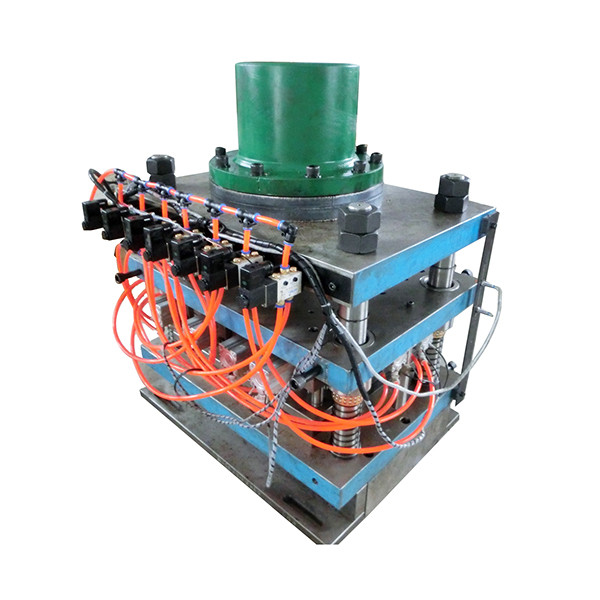
3. Wear Inspection: Early Detection Saves Cost
Wear is inevitable—but uncontrolled wear is costly.
The key difference between efficient and inefficient operations is not whether wear occurs, but how early it is detected and managed.
Critical Inspection Areas:
Cutting edges and punch tips
Die cavities and forming surfaces
Guide pins and alignment components
Common Warning Signs:
Micro-cracks
Surface pitting
Deformation or burr formation
Implement a Preventive Inspection System:
Schedule inspections based on production cycles (e.g., every 5,000–10,000 strokes)
Use magnification tools for micro-defect detection
Record wear patterns to predict failure trends
For buyers sourcing stamping parts, suppliers with structured inspection systems are significantly more reliable.
Long-tail keyword integration: stamping die wear inspection checklist, prevent mold failure early detection
4. Temperature Control: Stability Equals Quality
Temperature fluctuations directly affect material behavior, mold expansion, and final product quality.
Inconsistent temperature leads to:
Dimensional variation
Material deformation
Reduced repeatability
Key Control Factors:
Monitor mold temperature during production
Ensure proper cooling system operation
Avoid sudden temperature changes
Engineering Insight:
Thermal stability is critical in high-volume production. Even small temperature variations can accumulate into significant quality deviations.
For automotive and precision parts manufacturing, temperature control is not optional—it is essential.
Long-tail keyword integration: stamping mold temperature control, improve stamping consistency temperature
5. Operator Training: The Most Overlooked Competitive Advantage
Even the best molds and machines cannot perform without skilled operators.
In many factories, lack of training leads to:
Incorrect maintenance procedures
Delayed issue detection
Improper machine setup
Training Focus Areas:
Basic mold structure understanding
Standard maintenance procedures
Early defect identification
Safe and efficient operation practices
Business Impact:
Well-trained operators reduce downtime, improve quality, and increase overall production efficiency.
For OEM buyers, working with suppliers who invest in training ensures consistent output and fewer quality issues.
Long-tail keyword integration: stamping operator training program, improve manufacturing efficiency workforce
Market Insight: Why Maintenance Strategy Matters for OEM Buyers
In global sourcing—especially in regions like Europe and South America—buyers are shifting their focus.
They no longer choose suppliers based only on price.
They evaluate:
Production stability
Maintenance systems
Quality consistency
Technical support capability
Suppliers who integrate maintenance into their production philosophy deliver higher value and build long-term partnerships.
Conclusion: From Maintenance to Competitive Advantage
Stamping mold maintenance is not just a technical requirement—it is a strategic advantage.
By implementing these five critical practices:
Cleaning
Lubrication
Inspection
Temperature control
Training
Manufacturers can significantly extend mold life, reduce downtime, and improve product consistency.
For OEM buyers and aftermarket brands, choosing suppliers with strong maintenance systems ensures reliability, cost efficiency, and long-term success.
Frequently Asked Questions (FQA)
What is the most common cause of stamping mold failure?
The most common causes include poor lubrication, lack of cleaning, and delayed wear detection. These issues gradually degrade mold performance and lead to failure.
How often should stamping molds be maintained?
Routine cleaning should be done daily, while detailed inspections should be conducted every 5,000–10,000 production cycles depending on workload.
How can OEM buyers evaluate a stamping supplier?
Buyers should assess maintenance systems, quality control processes, operator training, and consistency of production output.
Does better maintenance really reduce production costs?
Yes. Preventive maintenance reduces downtime, extends tool life, and minimizes defective parts, leading to significant cost savings.
CTA
If you are looking for a reliable OEM metal parts supplier with strong stamping mold control, maintenance systems, and consistent quality output, choosing the right partner is critical.
We provide precision molds, stamped metal parts, and full-process manufacturing support for global OEM buyers. With proven experience, stable quality systems, and flexible production capabilities, we help manufacturers and brands reduce risk and improve performance.
Contact us today to discuss your stamping projects and discover how professional mold management can improve your supply chain.
What Can We Do For You